Crypto creeps onto Vegas: A peek at the future of casino gaming
In May 2025, the Venetian and Palazzo resorts in Las Vegas hosted Bitcoin 2025. Around 35,000 people attended, including the U.S. vice president. Crypto didn’t show up on the gaming floor. But the message was simple: in Las Vegas, digital coins aren’t just a curiosity anymore.

Online crypto casinos moved first
Casinos have argued about cashless gaming for years. Online platforms didn’t wait.
Crypto casinos make it easy to deposit and withdraw fast, often from anywhere. And because transactions live on the blockchain, players can also check whether a game was fair. That’s the appeal of provably fair systems.
Why this matters: it replaces “trust us” with “check it yourself.”
How provably fair games work
Provably fair games usually rely on three inputs:
- Server seed (kept secret at first)
- Client seed (chosen by the player)
- Nonce (the bet number)
Here’s the flow:
- Before the round, the casino shows a hashed version of its server seed.
This is a commitment. It can’t be changed later without it showing. - You place your bet, and the game combines the server seed, client seed, and nonce to produce the result.
- After the round, the casino reveals the original server seed.
- You can verify the outcome by running the same calculation and confirming the result matches what you saw.
So you’re not asked to trust the casino. You’re given a way to verify the math.
Land-based casinos are testing crypto at the edges
Most U.S. players who use crypto gambling still do it offshore. But some physical casinos are experimenting around the core experience:
- Crypto ATMs on-site
- Options to buy chips using crypto
- Loyalty programs linked to crypto wallets
These are small steps. Still, they show casinos are watching where payments and player behavior are heading.
Payments are getting more “bank-ready”
The plumbing is improving too.
In December 2025, Visa expanded its USDC settlement work in the U.S. The idea is simple: let banks settle transactions using a dollar-backed stablecoin, seven days a week. Faster settlement, fewer weekend gaps, and no change in how customers pay.
Early participants included Cross River Bank and Lead Bank, with settlement running over Solana. Wider rollout is expected in 2026.
What it all adds up to
These pieces point in the same direction:
- Big events in Vegas show public interest is real.
- Online crypto casinos already offer verifiable game systems.
- Physical casinos are testing crypto around payments and loyalty.
- Major networks are building settlement rails that look more like traditional finance.
You probably won’t walk into a Nevada casino tomorrow and bet with Bitcoin. But the direction is clear. The infrastructure is showing up bit by bit.
Related Articles

Crypto Casino Sponsorships: Roobet, Nadeshot and the Esports Boom
Esports and online gambling are crossing paths more often. In **September 2025**, **Roobet**, a crypto-focused gambling platform, announced a sponsorship deal with former *Call of Duty* champion and **100 Thieves** founder **Matthew “Nadeshot” Haag**. Financial terms were not shared, but Roobet said its branding would appear across Haag’s social channels and livestreams.

Celebrities and Crypto Casinos: Lawsuits Highlight US Player Harm
In late **2025** and early **2026**, several lawsuits put **Stake.us**, the U.S. version of a popular crypto casino, under a spotlight. Plaintiffs and regulators say the platform works like a real-money casino while presenting itself as a harmless social game.
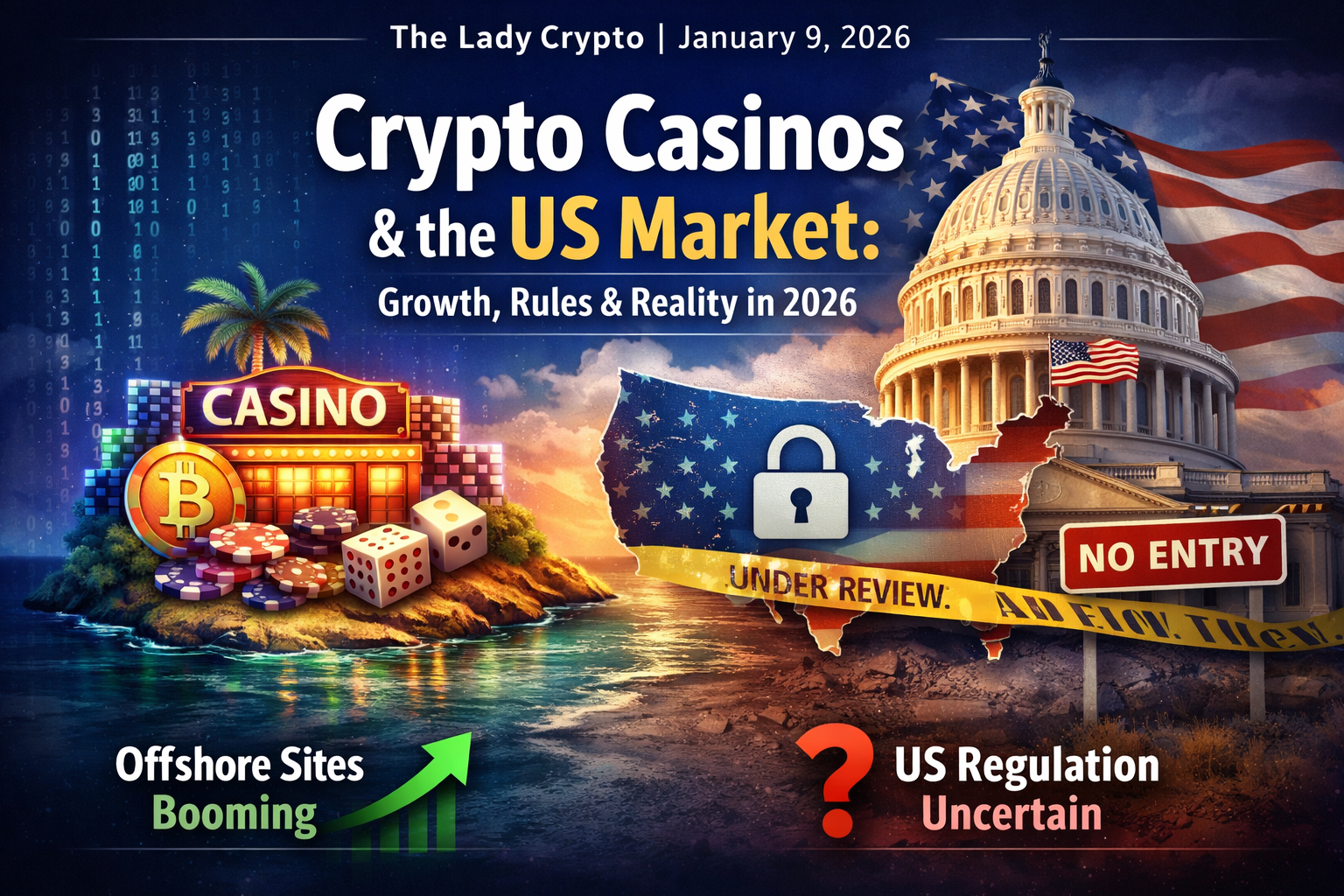
Crypto Casinos and the US Market: Growth, Rules and Reality in 2026
Crypto casinos are spreading worldwide. In the U.S., it’s more complicated. Americans can gamble with Bitcoin and other coins on offshore sites, but regulators still haven’t approved crypto casinos to operate legally at home. As **2026** begins, the market keeps growing and lawmakers are still trying to keep up.