Celebrities and Crypto Casinos: Lawsuits Highlight US Player Harm
In late 2025 and early 2026, several lawsuits put Stake.us, the U.S. version of a popular crypto casino, under a spotlight. Plaintiffs and regulators say the platform works like a real-money casino while presenting itself as a harmless social game.

How Stake.us works
A class action filed in Minnesota claims Stake.us offers online gambling that violates state law. To play, users must get one of two virtual currencies:
- Gold Coins, described as play-only
- Stake Cash, which can be exchanged for cryptocurrency
On paper, Gold Coins are just for fun. In reality, players buy coin bundles where the price closely matches the amount of Stake Cash included. The lawsuit argues that users are effectively paying for Stake Cash to gamble.
One plaintiff says he spent more than $80,000 on Stake Cash and later entered recovery for gambling addiction.
A casino in everything but name
In 2025, city officials in Los Angeles filed a civil complaint calling Stake.us an unlicensed gambling operation. According to the filing, the site works “like a traditional casino.”
Stake.us offers more than 1,900 games, including slots, table games, and live dealer options. Winnings can be redeemed for cryptocurrency or digital gift cards.
The complaint says Stake generated about $4.7 billion in gross revenue in 2024, much of it from U.S. players. Officials argue that Stake.us is essentially a clone of the offshore Stake.com casino, sharing the same design, games, and overall experience. By calling itself a “social casino,” they say, the company is trying to avoid U.S. gambling laws.
Celebrity promotion and new allegations
Stake’s growth has been fueled by celebrity promotion. Rapper Drake and streamer Adin Ross regularly promote the platform on social media and on Kick, a streaming site owned by Stake’s founders.
A class action filed in Virginia in January 2026 makes a different claim. It alleges that Drake and Ross used winnings from Stake.us to pay for automated bot streams. The goal, according to the suit, was to inflate Drake’s music royalties. The lawsuit seeks $5 million in damages and claims Stake’s anonymized systems helped hide large transfers.
Stake denies these allegations and says the claims are baseless.
Plaintiffs also argue that marketing by Drake and Ross made the platform seem legal and low-risk. They point to posts where Drake talked about gambling hundreds of millions of dollars and losing millions in a single month. The lawsuit claims Stake paid Drake around $100 million per year and provided free gambling credit to both promoters.
Why this matters
Crypto casinos are illegal in most U.S. states, but they are still easy to access through offshore platforms. Industry research suggests global crypto casino revenue reached over $80 billion last year. Some estimates say up to 30 percent of Americans use VPNs to get around location blocks and gamble online.
Stake’s reported revenue and its high-profile endorsements show how large this market has become.
These lawsuits highlight how celebrity marketing and complex virtual-currency systems can blur the line between social gaming and real-money gambling. Regulators and plaintiffs argue that players are misled, spend large sums, and face addiction risks, while promoters earn massive fees. The outcome of these cases could shape how crypto casinos operate in the U.S. going forward.
Related Articles

Crypto creeps onto Vegas: A peek at the future of casino gaming
In **May 2025**, the **Venetian** and **Palazzo** resorts in Las Vegas hosted **Bitcoin 2025**. Around **35,000 people** attended, including the **U.S. vice president**. Crypto didn’t show up on the gaming floor. But the message was simple: in Las Vegas, digital coins aren’t just a curiosity anymore.

Crypto Casino Sponsorships: Roobet, Nadeshot and the Esports Boom
Esports and online gambling are crossing paths more often. In **September 2025**, **Roobet**, a crypto-focused gambling platform, announced a sponsorship deal with former *Call of Duty* champion and **100 Thieves** founder **Matthew “Nadeshot” Haag**. Financial terms were not shared, but Roobet said its branding would appear across Haag’s social channels and livestreams.
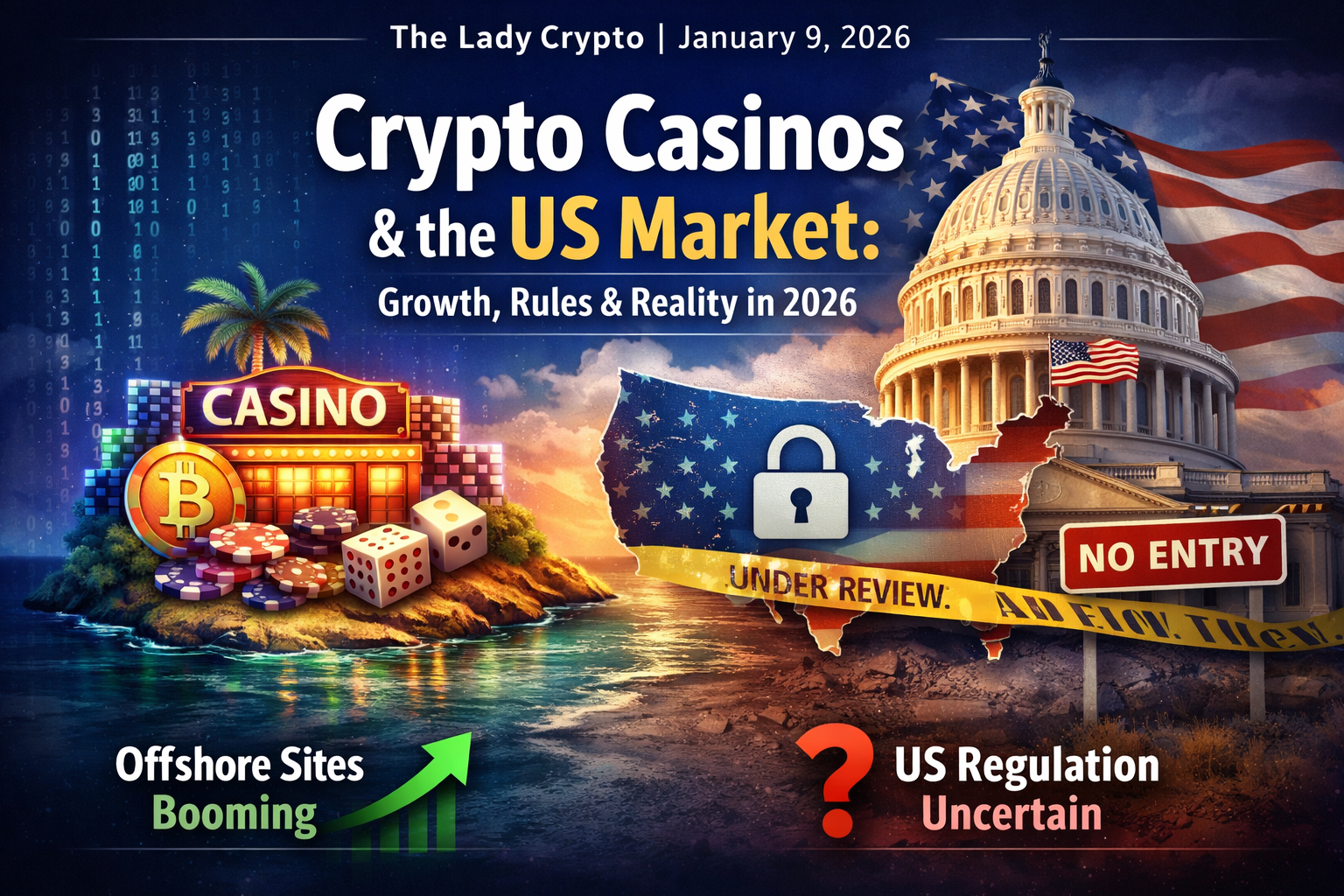
Crypto Casinos and the US Market: Growth, Rules and Reality in 2026
Crypto casinos are spreading worldwide. In the U.S., it’s more complicated. Americans can gamble with Bitcoin and other coins on offshore sites, but regulators still haven’t approved crypto casinos to operate legally at home. As **2026** begins, the market keeps growing and lawmakers are still trying to keep up.